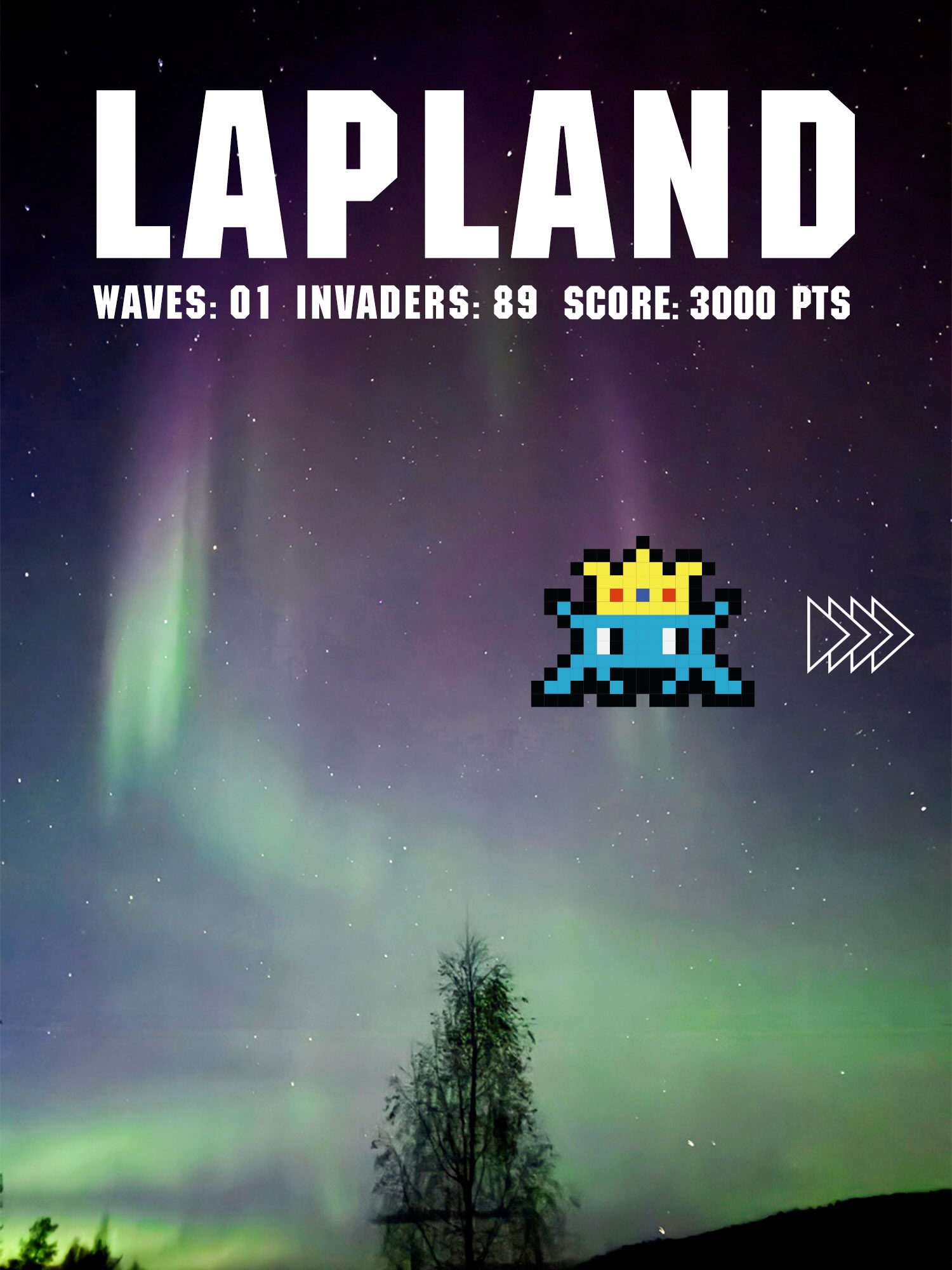
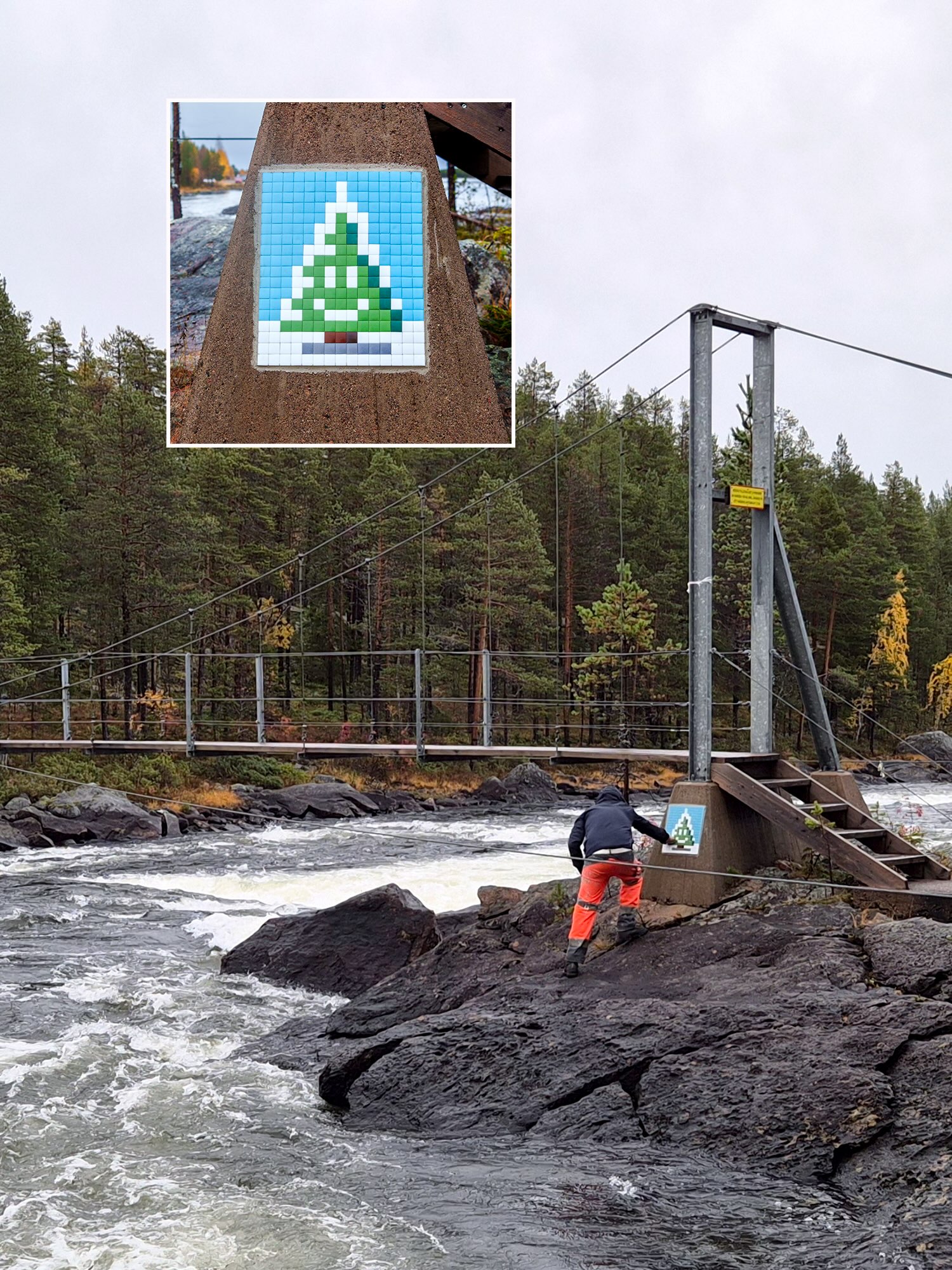
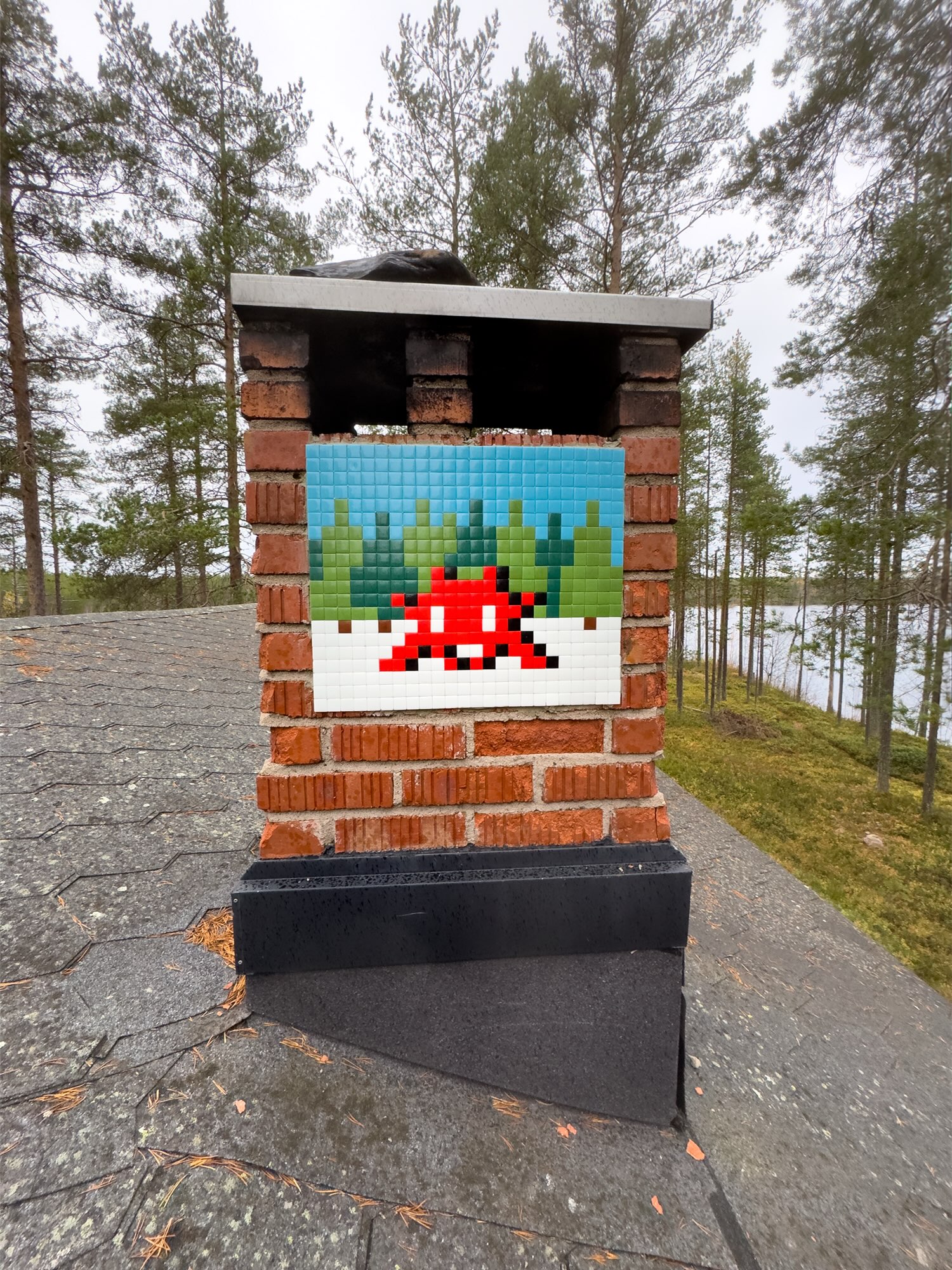
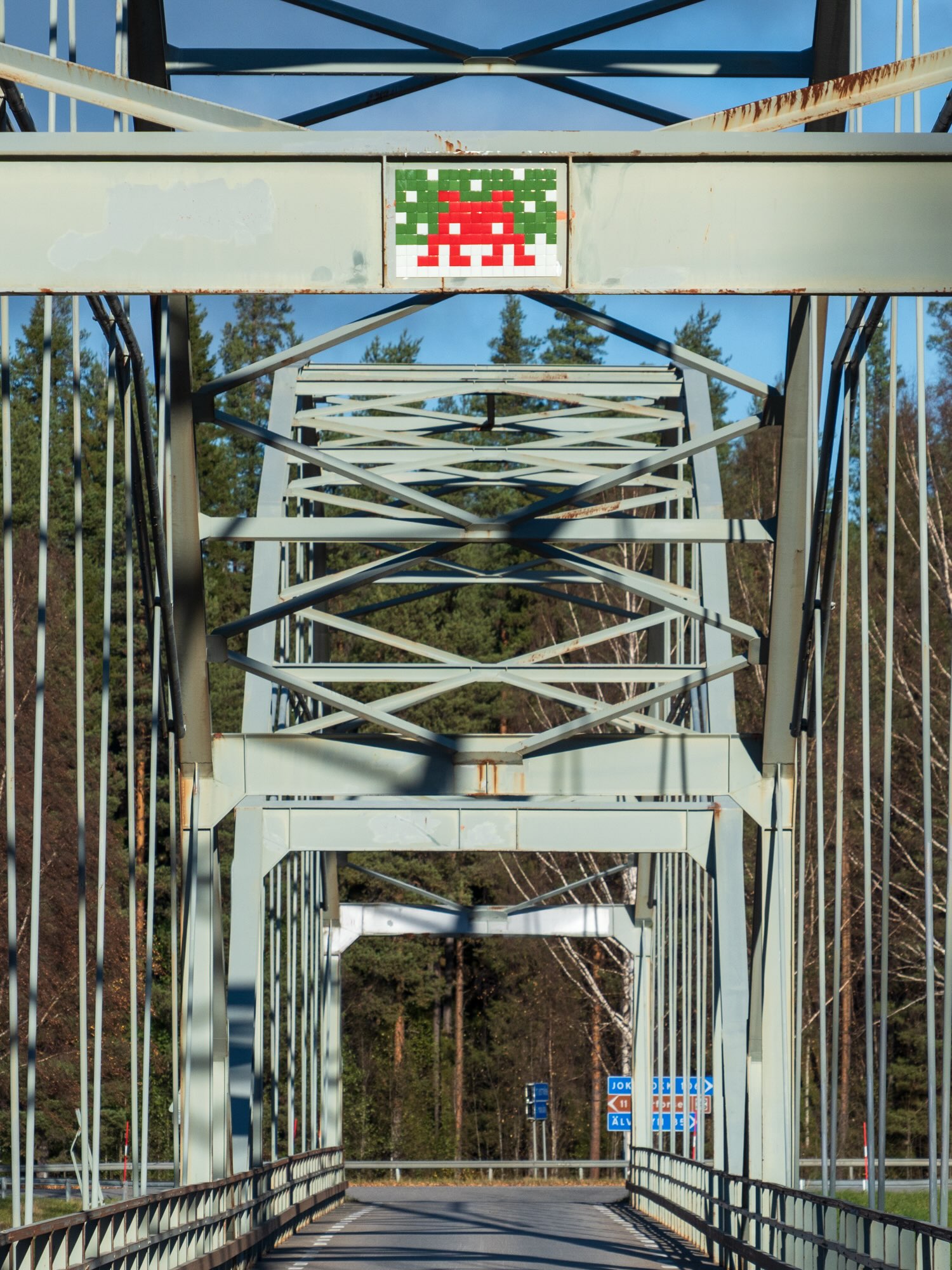
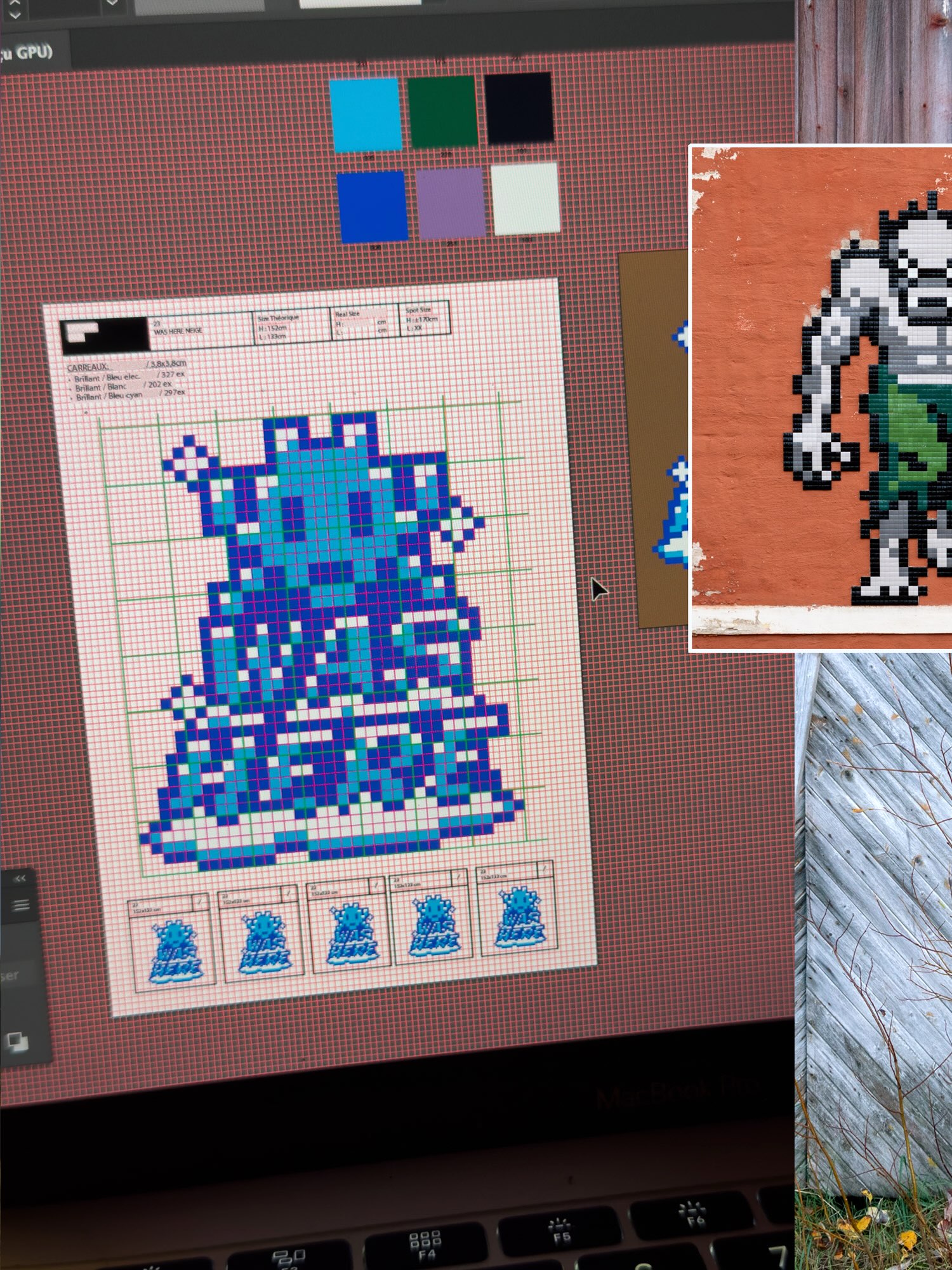
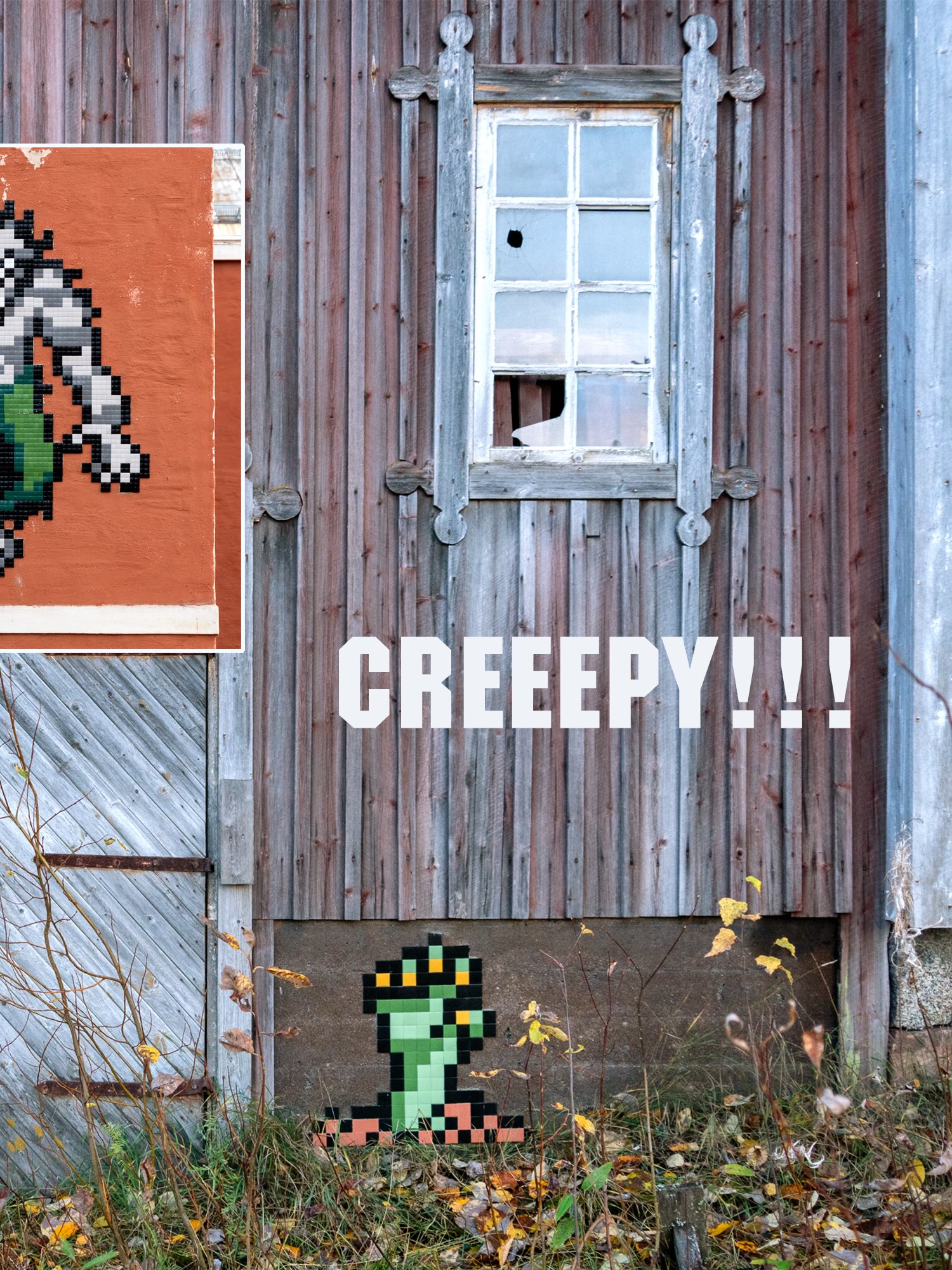
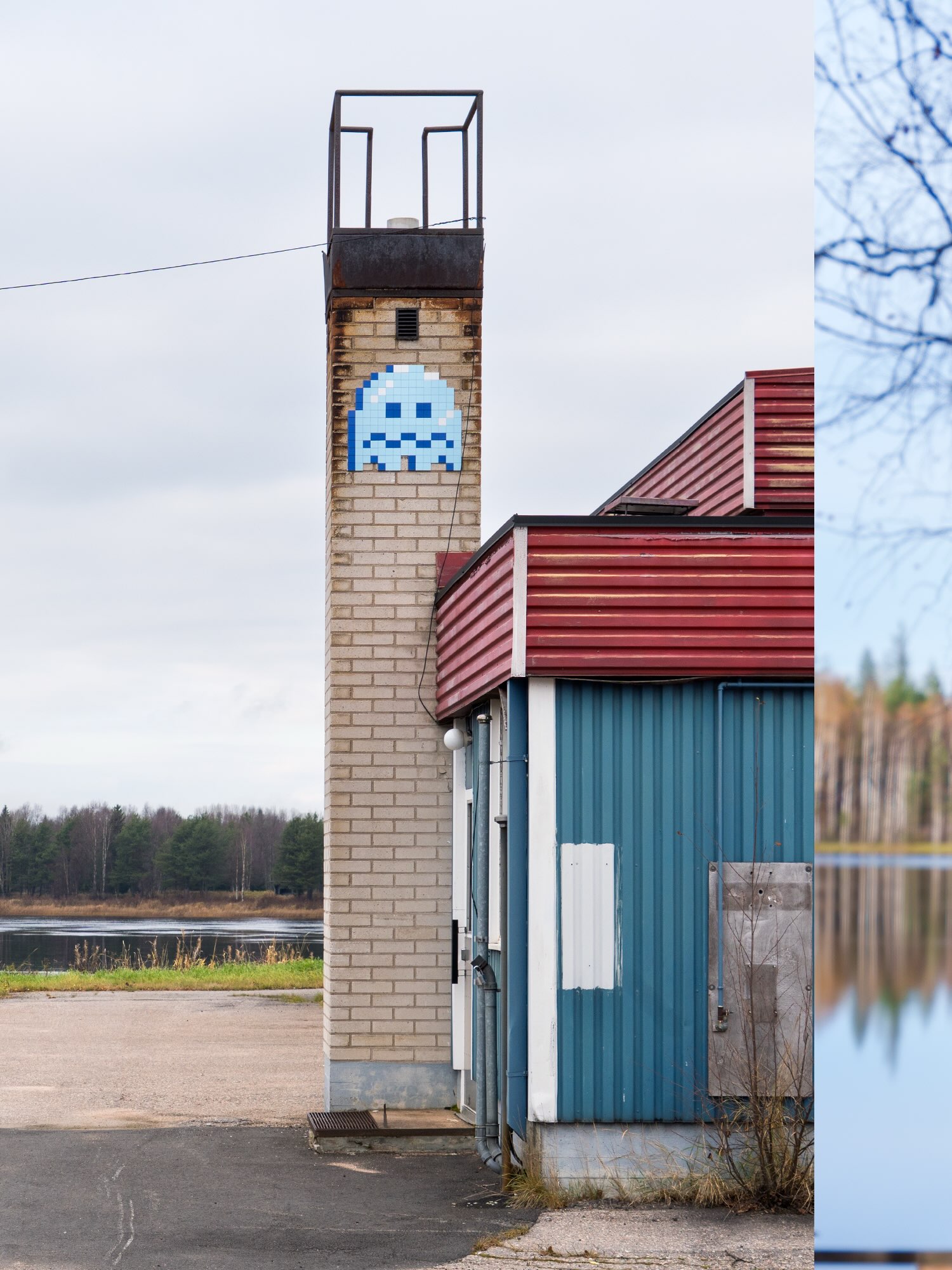
Invader has completed the first wave of his Lapland invasion: 89 mosaics installed across an area he describes as spanning thousands of square miles. Made in autumn 2026, the project carries his tiled figures beyond the concentrated city streets where they are usually found, into northern towns, river valleys and forest landscapes.
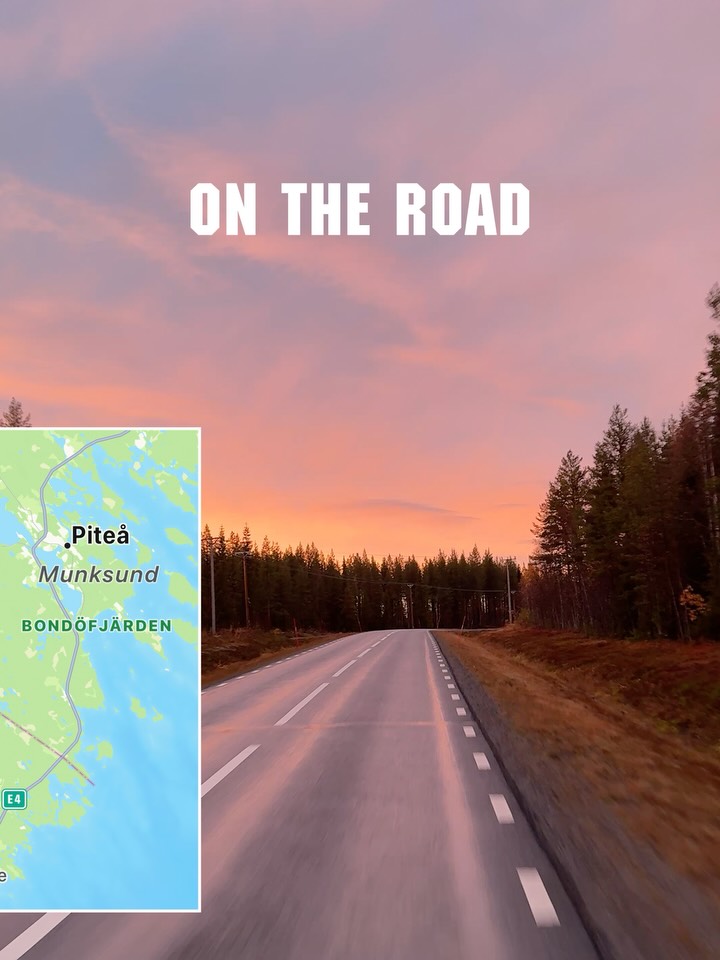
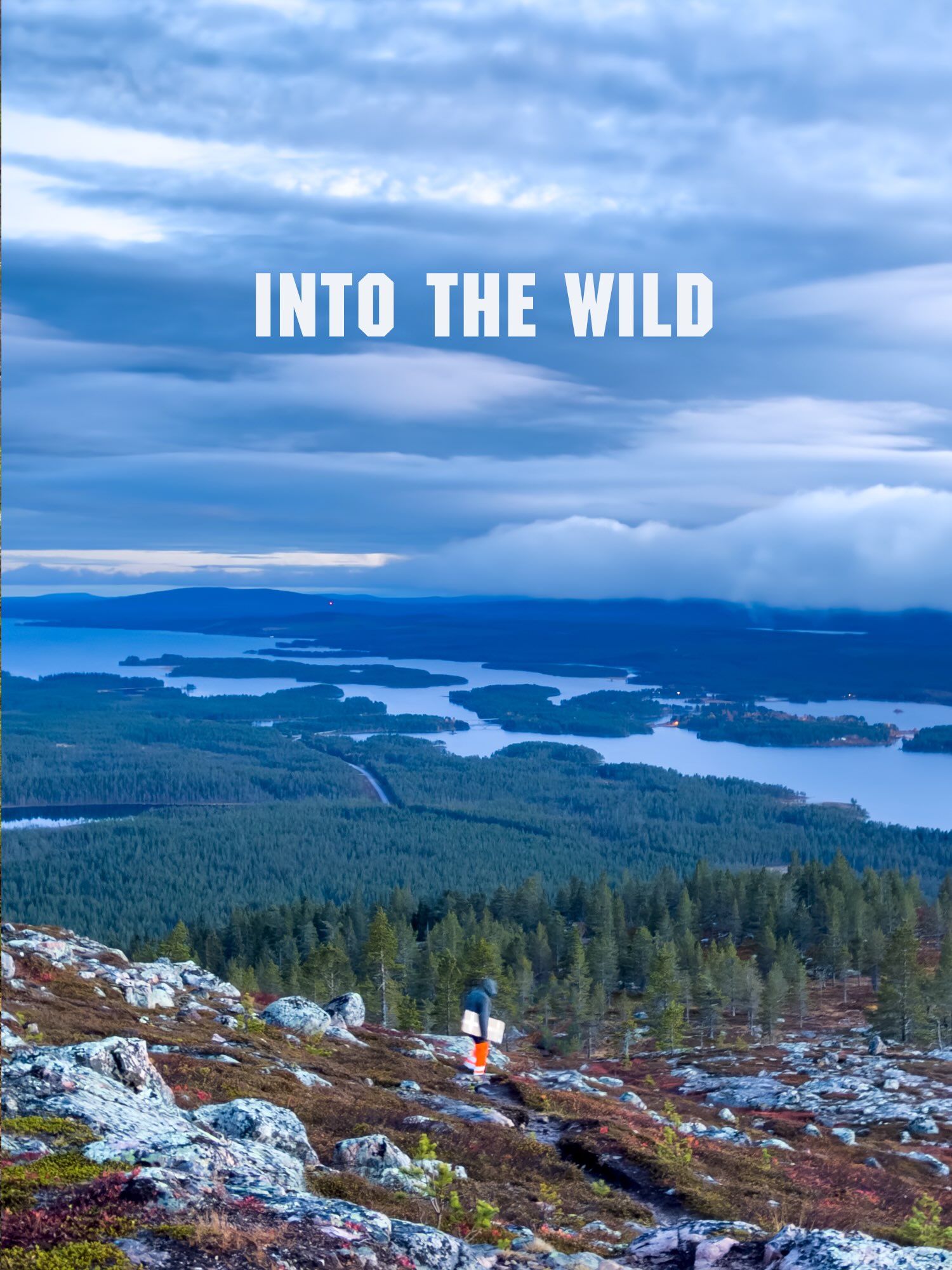
The distance between works changes the character of the search. In Arctic Sweden, mosaics appear on buildings in town centres, but also at viewpoints and beside water. At Grodkällan, a frog motif sits near a forest spring; at Snipen, LAP_33 is fixed to a wooden shelter at a hilltop viewpoint. These are small works set against a much larger landscape.
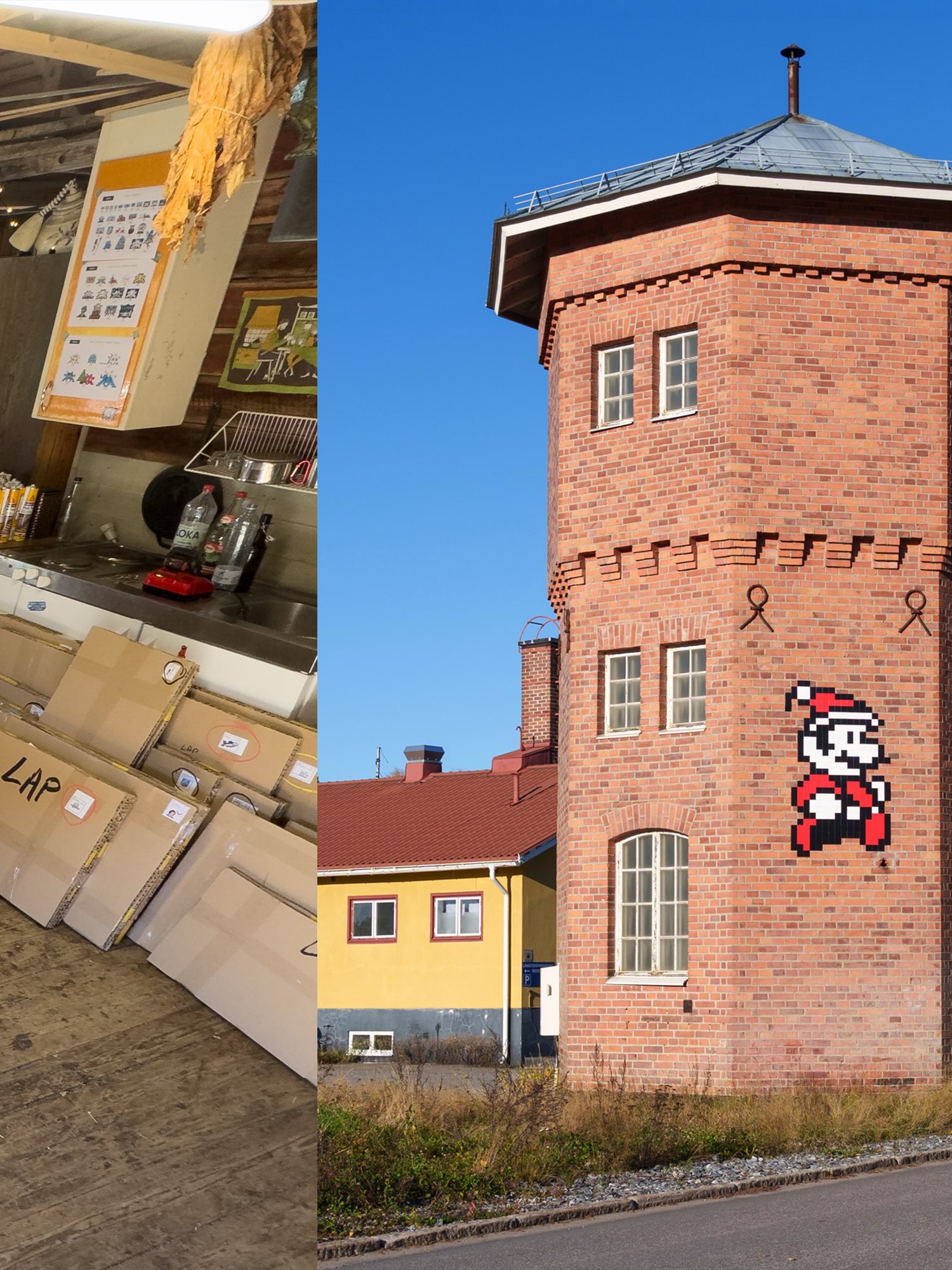
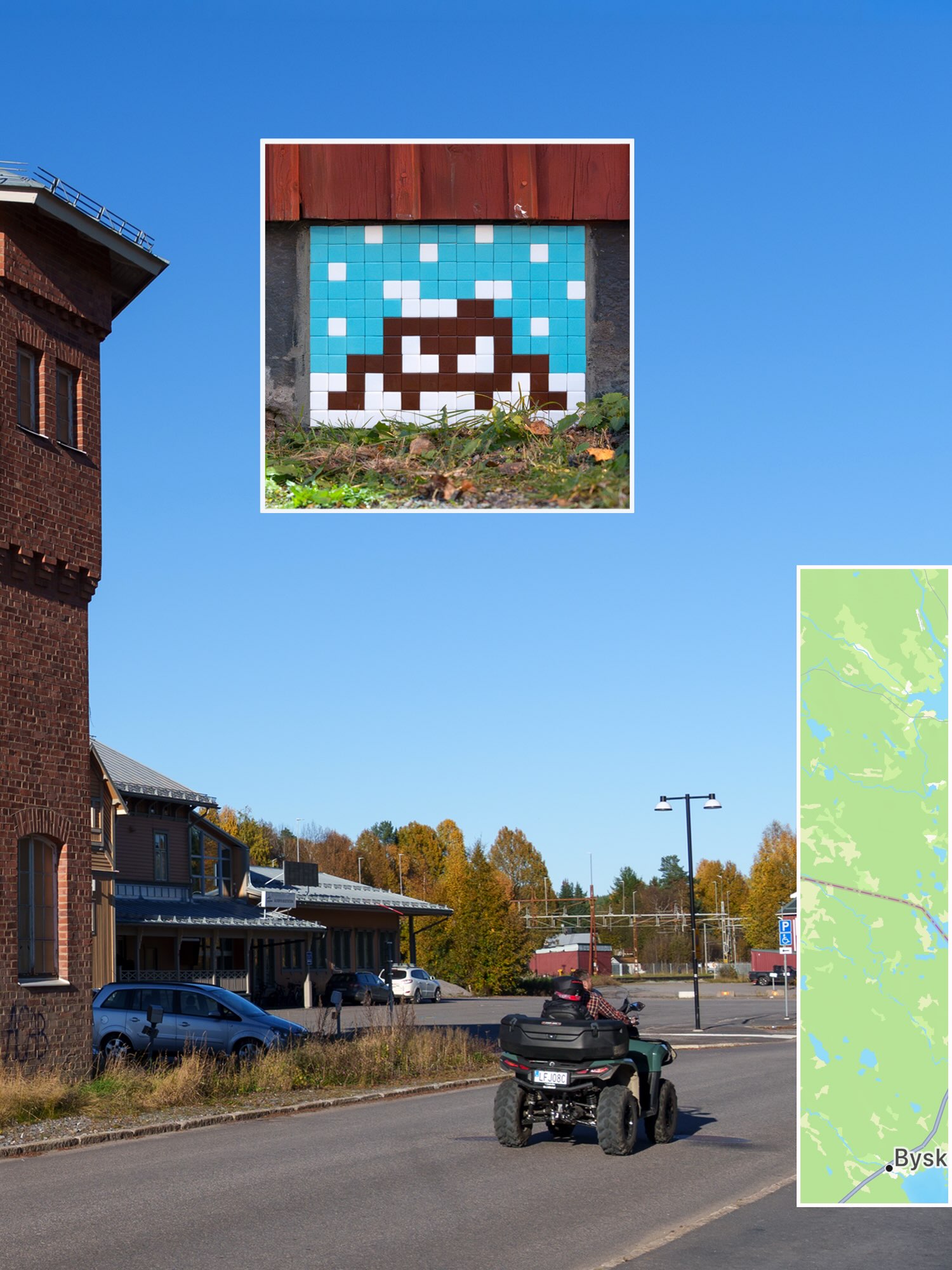
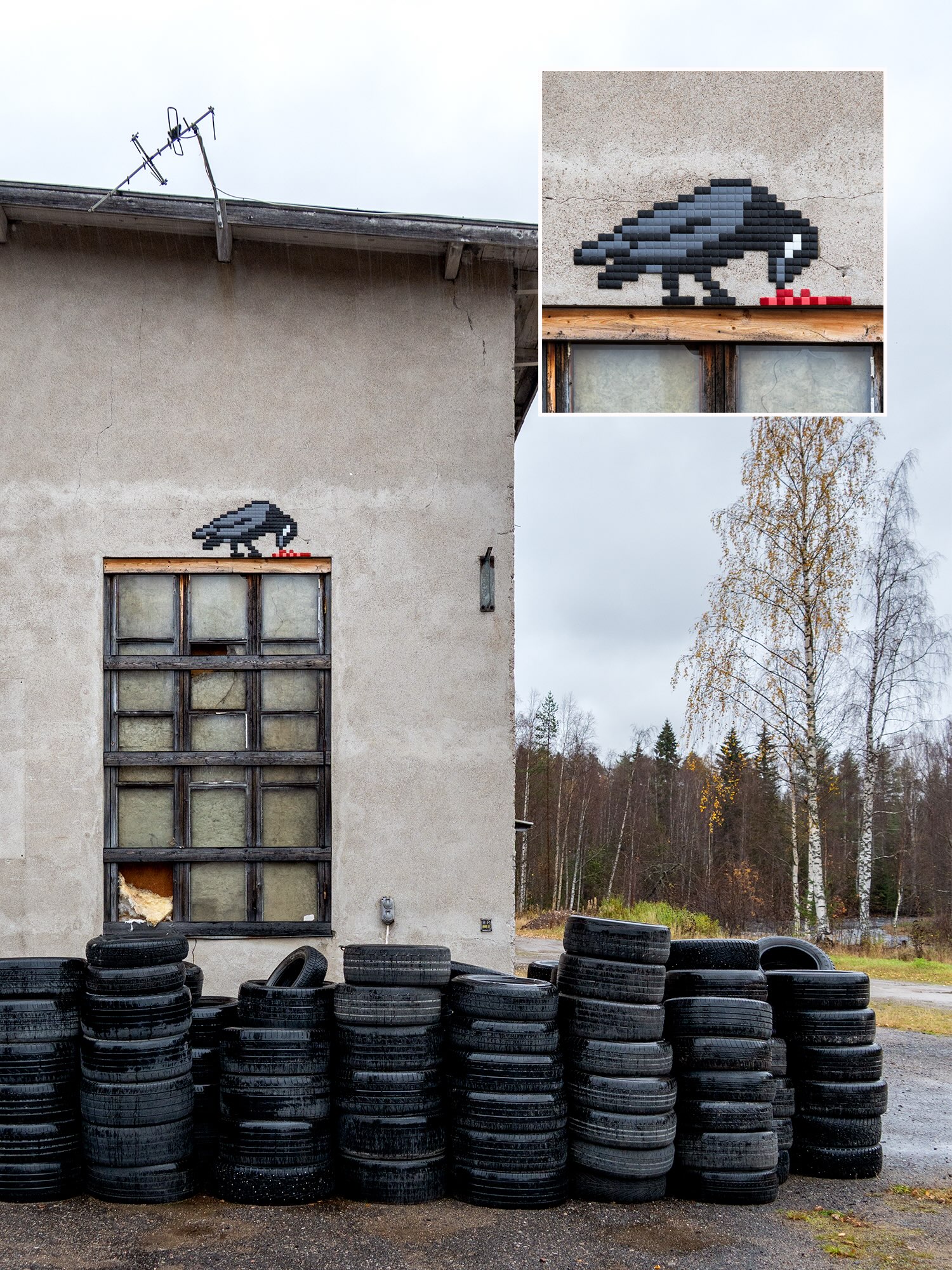
Individual pieces also pick up different surroundings. The regional visitor guide places LAP_89 near the boat quay in Luleå’s South Harbour and a pixelated crow, LAP_65, at a road junction in Töre. In Älvsbyn, Invader’s version of Super Mario occupies an old water tower. Together, such sites show how far this first wave reaches beyond a single city.
Invader called the journey “an extraordinary adventure through magical landscapes.” In an interview with Swedish Radio’s P4 Norrbotten, he said he believed he had installed more pieces on this trip than on any previous one. His longstanding method gives ceramic tiles the appearance of pixels, turning characters associated with screens into objects encountered in physical space; here, finding them can mean travelling between settlements rather than walking a neighbourhood.
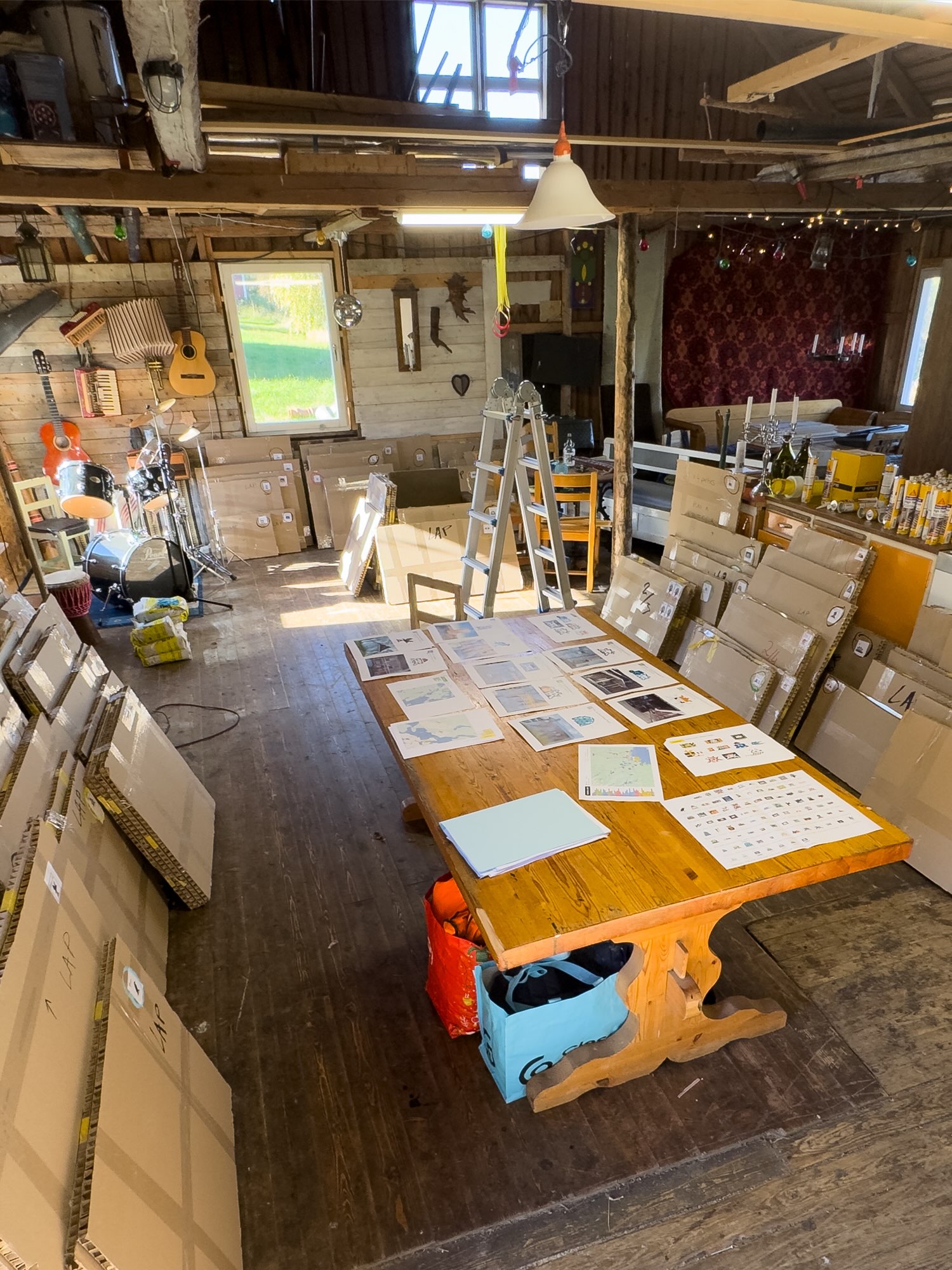
Arctic Sweden Visitors Board has published a developing map and road-trip guide to the mosaics. Visitors can also photograph works they find through Invader’s FlashInvaders app, which awards points for validated images of the mosaics in place.
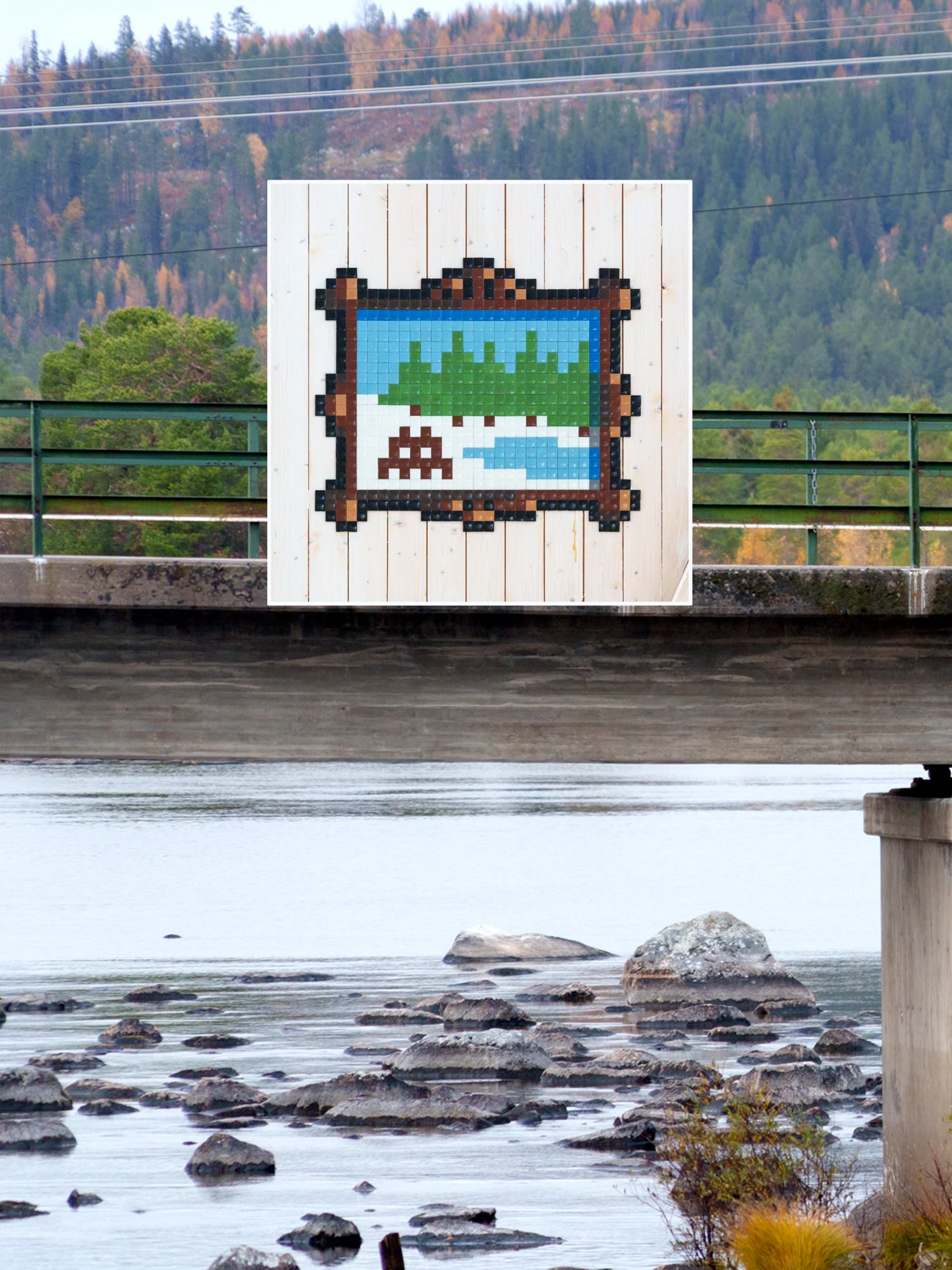
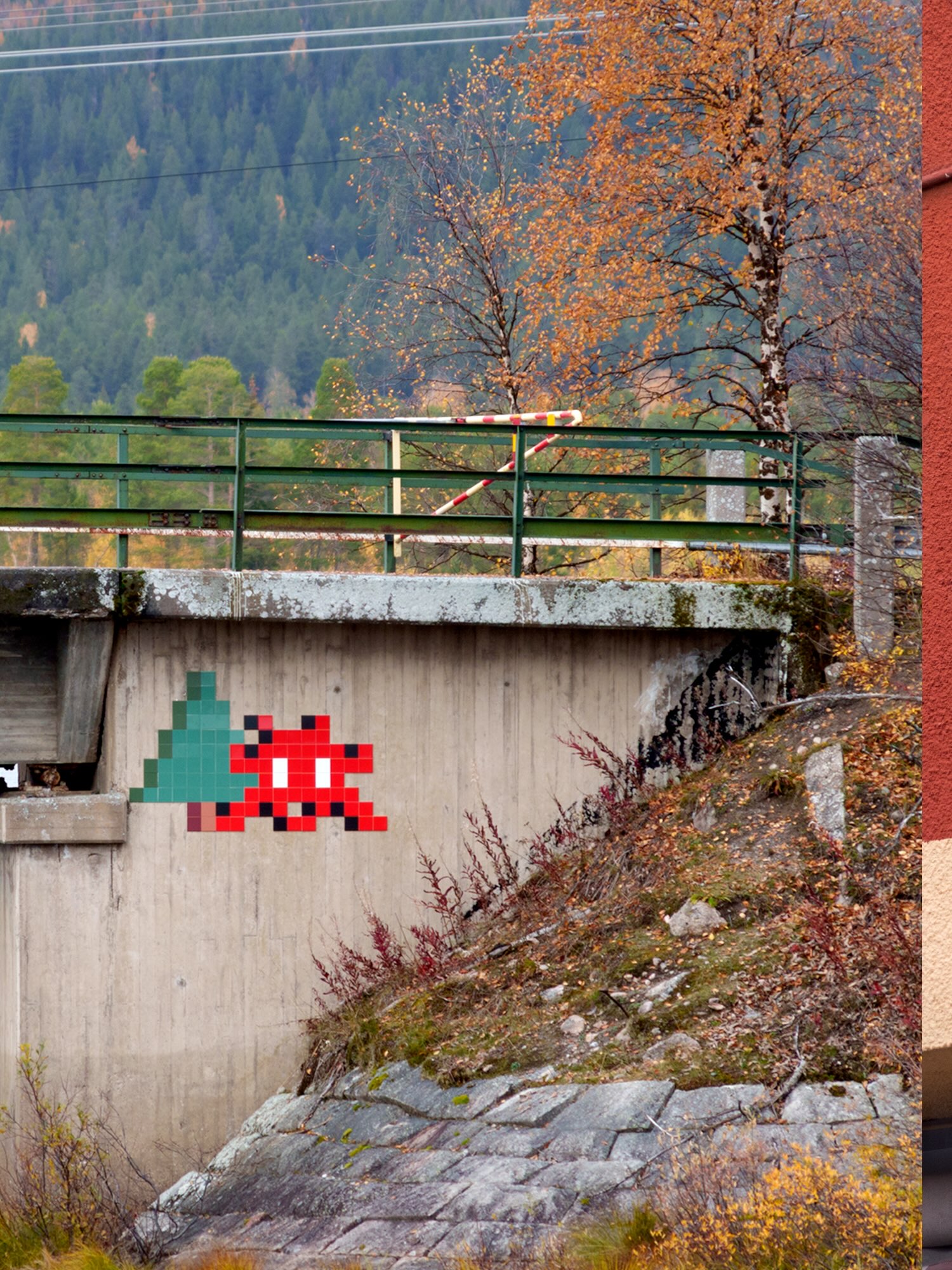
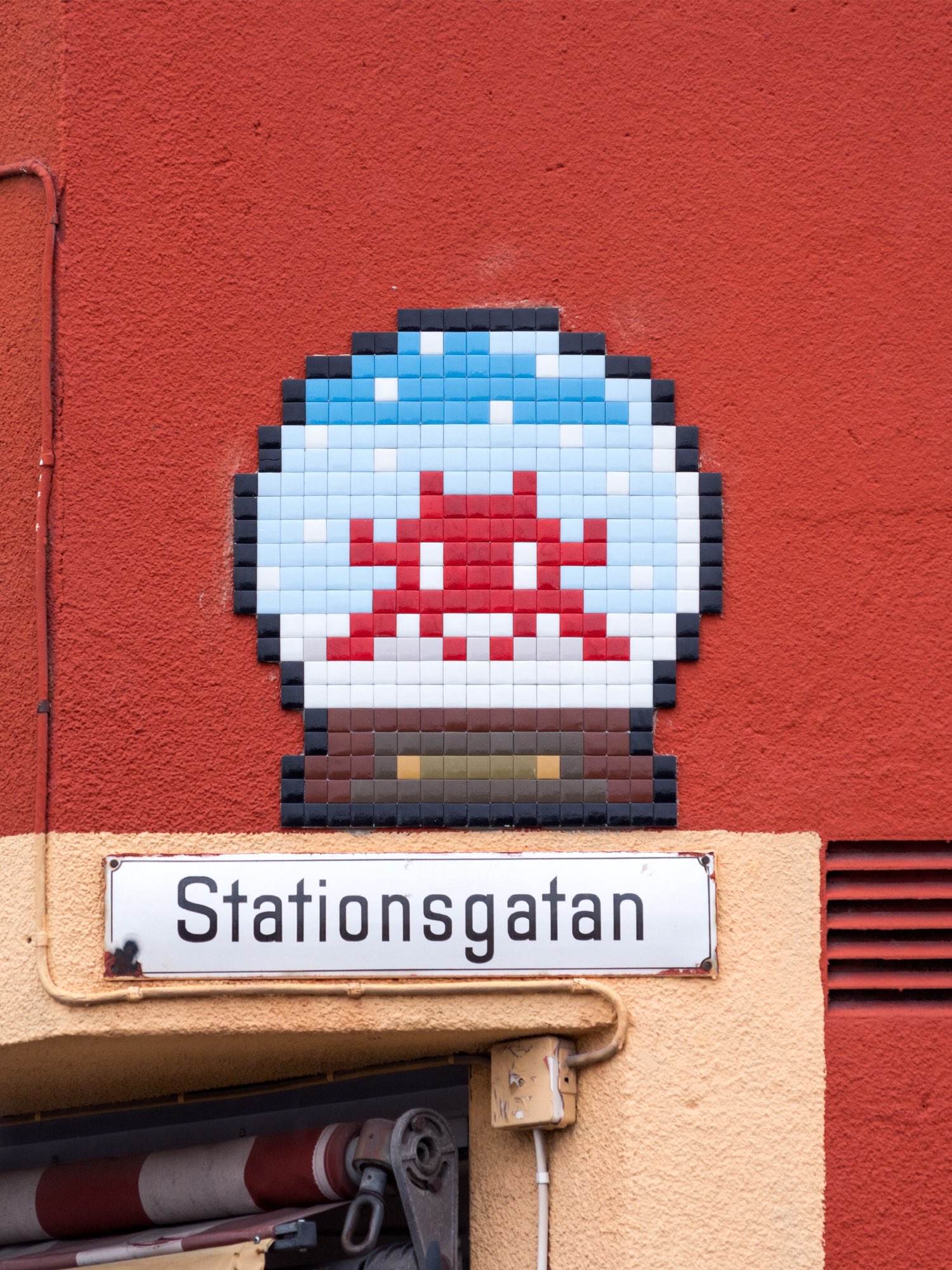
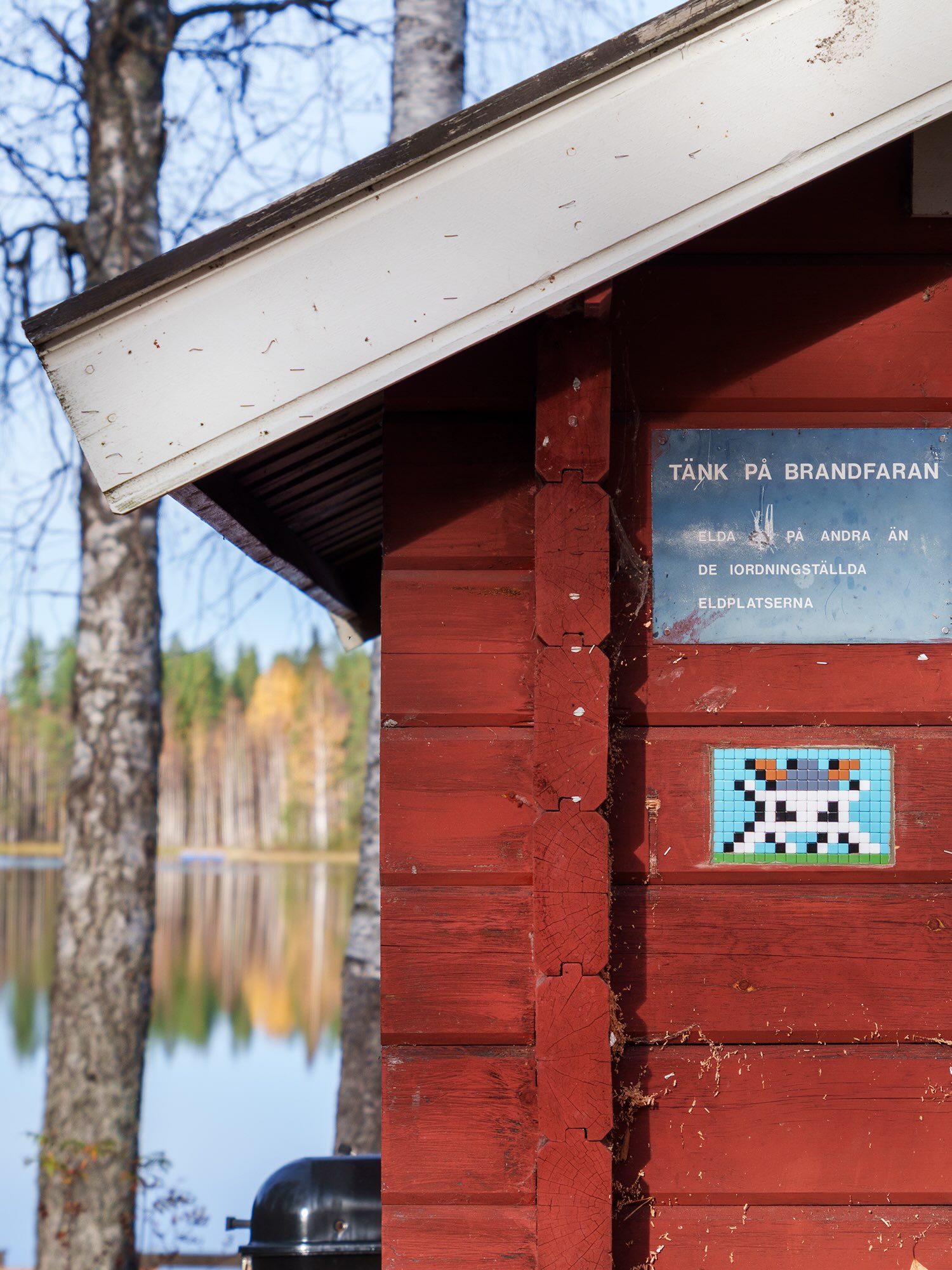
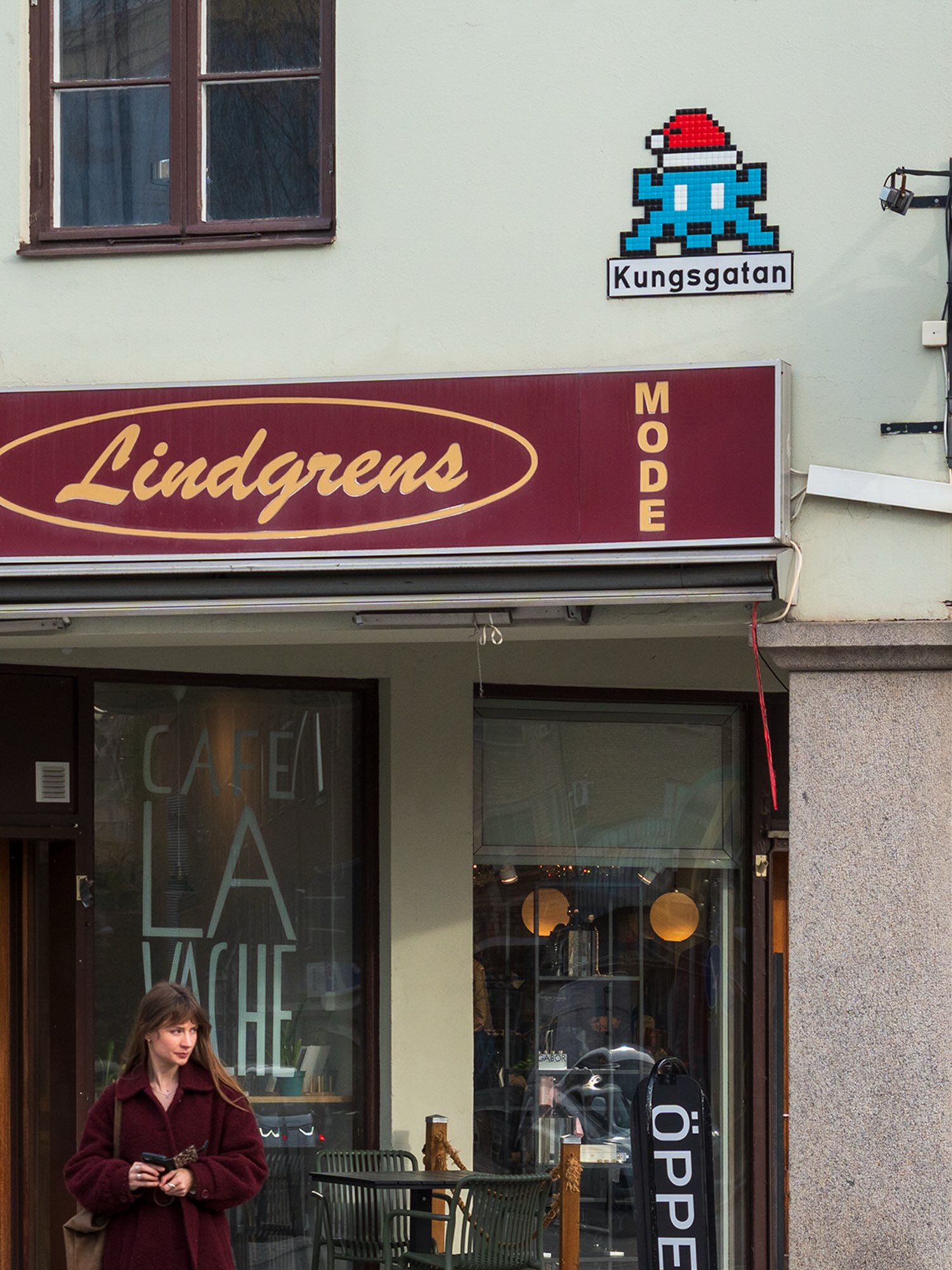
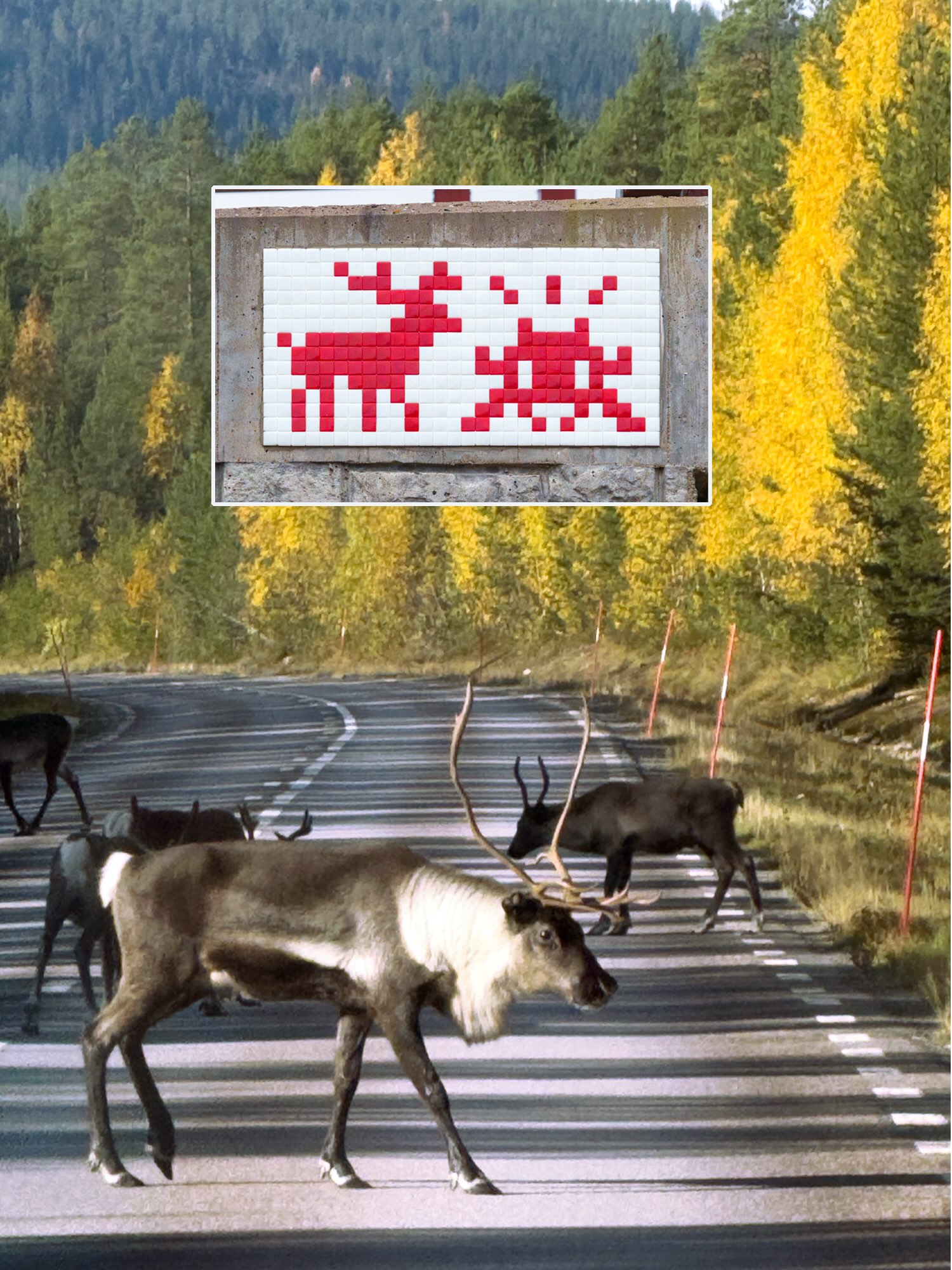
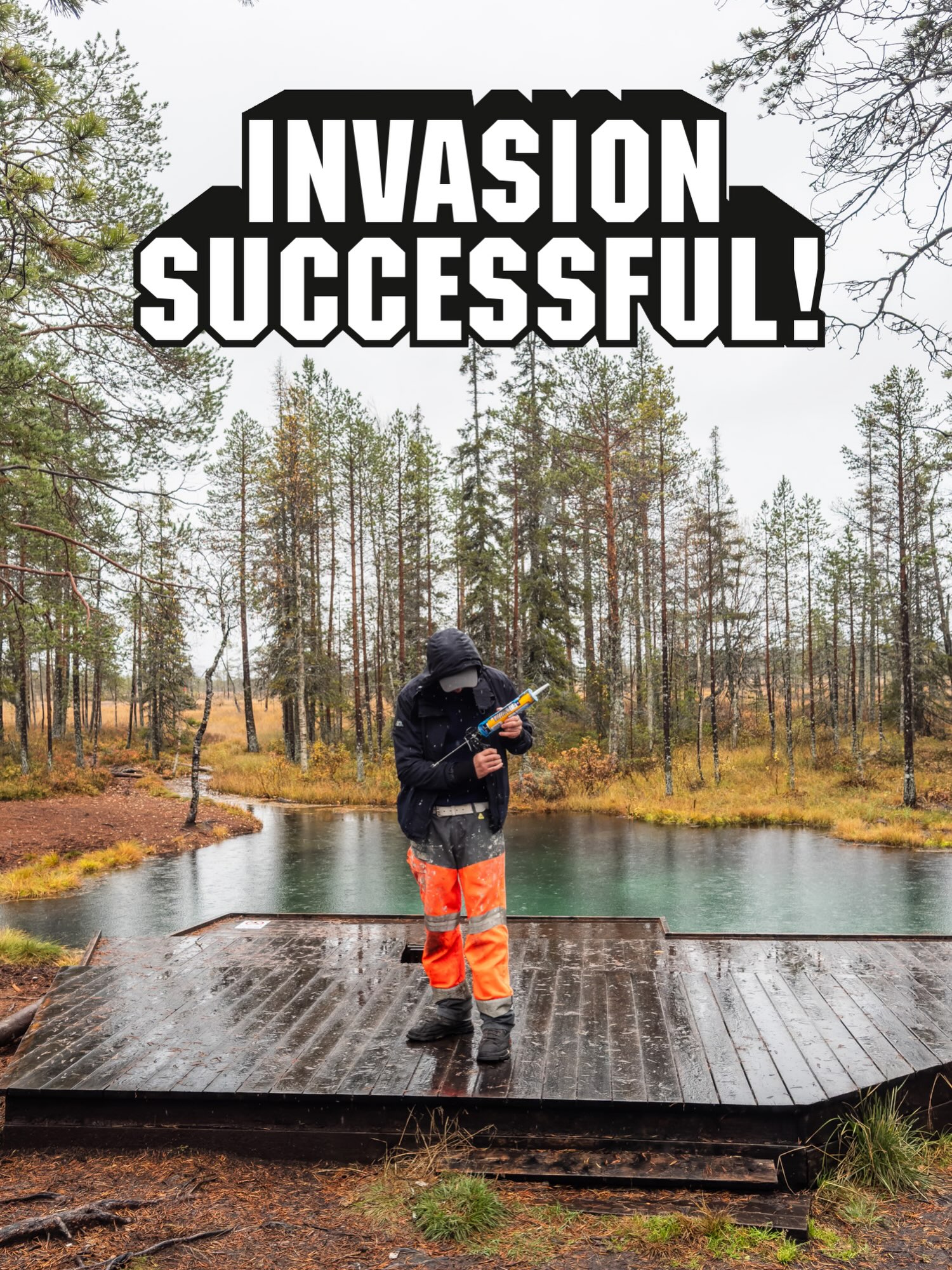
Images via @invaderwashere on Instagram.