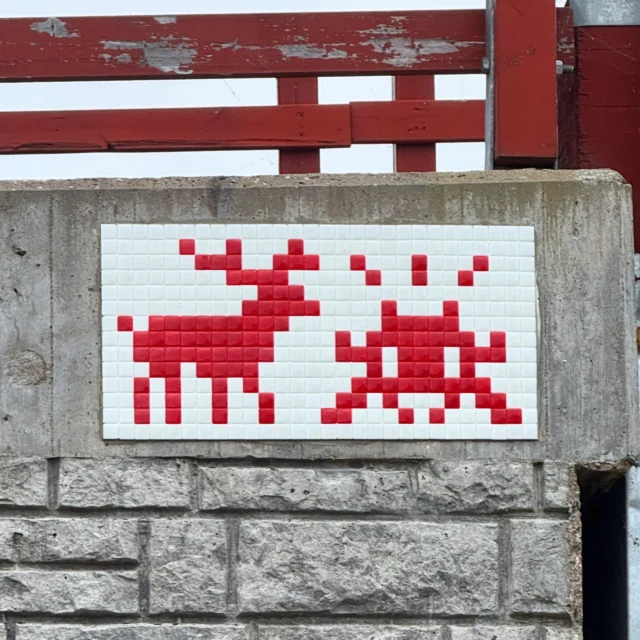


Invader turns the pixel into a physical object. Ceramic mosaics bring the visual language of early video games onto buildings, where a small figure can change the way a corner, doorway or stretch of street is noticed. Since the Space Invaders project began in 1998, the artist has treated placement as a central part of the work.
The individual mosaics also belong to a larger system. Works are documented and numbered, cities accumulate their own records, and FlashInvaders adds a game of discovery. The project encourages a particular kind of attention: looking above the usual field of vision, taking a different route and noticing surfaces normally passed without a second glance.
StreetArtNews has followed invasions across a wide range of settings. Our retrospective is a useful entry point; the city reports show how the same tiled vocabulary meets different architecture and local references. Potosí, Tokyo, Los Angeles and Rabat offer four distinct ways into that story. The Paris exhibition coverage adds another setting in which the artist’s system can be encountered.
This is a guide to our reporting, with historical dates retained. Old photographs and location captions do not confirm that a mosaic survives in place today. For the artist’s own project information and current FlashInvaders guidance, use the official links below.